
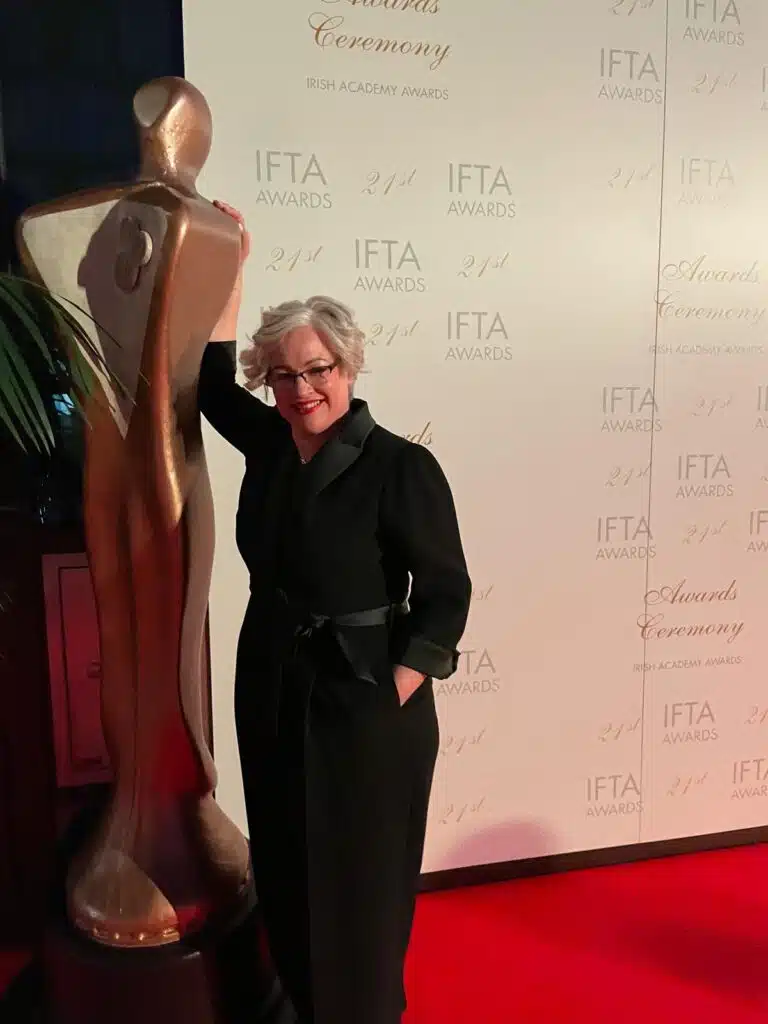
This success story focuses on IFTA-nominated writer, director and producer Patricia Kelly, who did three live workshops/programmes with us (Successful Comedy in 2019, Successful TV series in 2022, Feature Rewrite in 2024-2025) and who has since reached phenomenal achievements! Her debut feature Verdigris was nominated for five Irish Film and Television Awards, including Best Film, Best Screenplay and Best Director. She can be reached through her agent, Christina Pickworth at Imagine Talent.
The video interview below was recorded with Patricia on the 1st of March 2026. English subtitles can be enabled manually in the playbar if they don’t show automatically. A clickable chapter list, a full transcript and next steps are available after the video.
You can like (and comment on) this interview on LinkedIn.


Chapter List
- 00:00
Intro Patricia Kelly (award-winning screenwriter, director and producer, MnáMná Films) - 00:48
What’s your background and your experience? - 04:00
What’s your methodology and creative process as a writer? - 08:35
How does this change when you work with another writer as a co-writer or as a director? - 13:32
What was the impact of the Comedy and TV series workshops on your career? - 17:57
Why did you decide to apply for the Feature Rewrite Programme? - 19:30
How did you find the Advanced Script Development Workshop (Stage 1 of the Feature Rewrite programme)? - 22:11
As an experienced writer-director, what did you learn in the self-led course that was directly applicable? - 25:14
What did the online course bring to the table compared to the book, Screenwriting Unchained? - 27:25
How did The Rewrite Stuff workshop (Stage 2 of the Feature Rewrite programme) go and did it help you move your project and y our career forward? - 31:22
What was the impact of The Rewrite Stuff on your project? - 33:56
Is there anything that you could attribute to the training and development work we’ve done together? - 35:12
What are you working on, what can we read or watch and what’s in the pipeline? - 37:48
Thanks Patricia and congrats!
Interview Transcript
- Chapter List
- Intro Success Story Patricia Kelly (award-winning screenwriter, director and producer, MnáMná Films)
- What's your background and your experience?
- What's your methodology and creative process as a writer?
- How does this change when you work with another writer as a co-writer or as a director?
- What was the impact of the Comedy and TV series workshops on your career?
- Why did you decide to apply for the Feature Rewrite Programme?
- How did you find the Advanced Script Development Workshop (Stage 1 of the Feature Rewrite Programme)?
- As an experienced writer-director, what did you learn in the self-led online course that was immediately applicable?
- What did the online course bring to the table compared to the book, Screenwriting Unchained?
- How did The Rewrite Stuff workshop (Stage 2 of the Feature Rewrite Programme) go and did it help you move your project and your career forward?
- What was the impact of The Rewrite Stuff on your project?
- Is there anything that you could attribute to the training and development work we've done together?
- What are you working on, what can we read or watch and what's in the pipeline?
- Thanks Patricia and congrats!
- Contacting or Finding Out More About Patricia Kelly
- Sharing Your Own Success Story
- Finding Out More About Our Training
- Get Access to FREE Resources
Intro Success Story Patricia Kelly (award-winning screenwriter, director and producer, MnáMná Films)
[00:00:00] Emmanuel Oberg: Hi Patricia.
[00:00:02] Patricia Kelly: Hi Emmanuel. How are you?
[00:00:03] Emmanuel Oberg: I’m very well, thank you. It’s really nice to have you. Thanks for taking the time to have a chat with us today, I know how busy you are! We have worked together through various workshops since 2019 and you’ve experienced phenomenal success, most recently with your debut feature, Verdigris, which was remarkable. So I thought it would be a good time to have you here to share your success story with us.
[00:00:35] Patricia Kelly: Yeah. Great. I’ve always found the workshops really helpful, so I’m very happy to chat to you about how projects have developed because of them and since then, and so on.
[00:00:46] Emmanuel Oberg: Fantastic. First can you just tell us a little bit about your background and your experience as a writer, director, and a producer?
What’s your background and your experience?
[00:00:55] Patricia Kelly: Yeah, sure. I began my creative career as an actor, a million years ago, and I think very much that that experience has paid dividends for me in terms of becoming a writer. Now I was always writing, even as a kid, as a teenager, so that’s just something that has always been part of my life. But I really only absolutely focused on screenwriting I would say about 15 years ago.
I did a Masters in screenwriting in IADT and from that point, I really wanted to get to grips with the craft of screenwriting and really focus on becoming as good a screenwriter as I could, with everything else then following from that. Becoming a director and a producer came further down the line, and really that came a lot through the frustration of not managing to get my work read, never mind made. I really struggled with that. So, out of frustration…
[00:02:06] Emmanuel Oberg: Yeah, you’re not alone. [laughter]
[00:02:09] Patricia Kelly: Exactly. So I just reached a point, because of course so many of us have lives and families and things like that. And my screenwriting was taking me away from my family an awful lot. And I felt I didn’t have anything to show for it.
So I went down the road of self-teaching myself through YouTube and other means and books and so on, and attending workshops and all the rest, learning how to direct and how to produce and then, trial and error and making mistakes through making short films and so on.
So now at this stage, I describe myself as primarily a writer-director. I sometimes write for other people, I sometimes direct for other people, but I also run MnáMná films and very occasionally I just produce other people’s work as well. And, so far it started off with a number of short films, then moved on to my first feature, Verdigris.
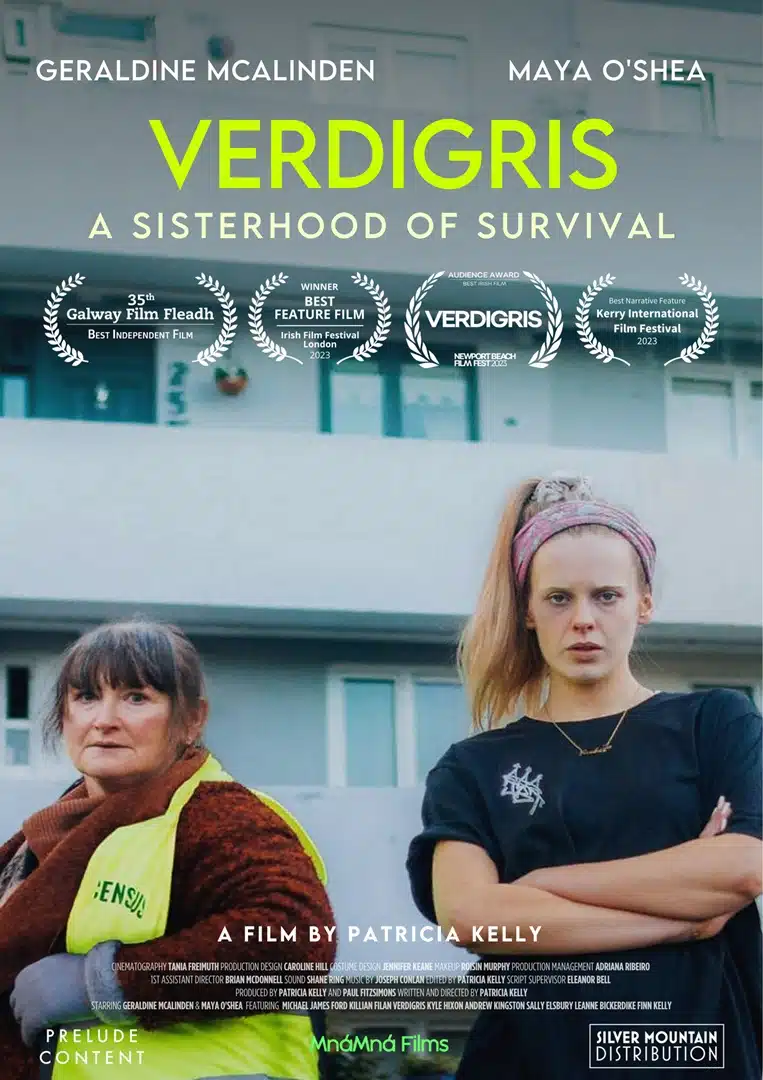
And now it has opened up a little bit and so, across the board as a writer, director, producer, I’m now working on or attached to five features and two TV shows at very different stages of development. Some are really in the earliest possible stages and others are a good bit along the way.
But I still do sometimes act and I sometimes edit. So I’m involved really across the board now in terms of filmmaking, and hopefully will move into TV as well in the coming couple of years.
[00:03:54] Emmanuel Oberg: Great. A hyper-hyphenate! [laughter]
[00:03:55] Patricia Kelly: Yes, exactly.
What’s your methodology and creative process as a writer?
[00:03:59] Emmanuel Oberg: As a writer, I’m always curious to hear how other storytellers work. That’s a question that I ask everyone because we’re all different, we all have different ways of working. So can you tell us a little bit more about your methodology and how you like to work as a writer, and what your creative process is?
[00:04:18] Patricia Kelly: Yeah, sure. I can’t remember the term that we discussed in Donegal last year. There were two types of writers…
[00:04:26] Emmanuel Oberg: Is it ascending or descending?
[00:04:28] Patricia Kelly: That’s the one, yes. So I think, if I’m correct, I’m ascending. Basically I start with an outline, and develop from that. So I do an awful lot of work on the story. Personally, I tend to like to break things down into eight sequences at the very beginning of the process. I just find that, trying to think of it that way and not “I have a hundred pages to write” [really helps]. I actually tend to even think of them like: “I have 10 pages to write in sequence one and 10 pages to write in sequence two”.

And so for me, breaking it down like that just makes it much more manageable. It’s not such a big mountain to climb. So I tend to structure it like that and within the dramatic three-act structure. So it’s only really when I’m quite happy with how that outline looks — I usually often work say in just Excel or something like that, just to have it roughly plotted — that I start breaking it down into scenes.
Not worrying too much about how many scenes there are here or there or whatever. Just that it makes narrative sense, is moving along and so from that then, when I have it in decent shape in the outline, I then generally, where I can, just try and bash out the first draft and don’t mind at all how rough it is.
If I can, I try and get that done even in a week, because I find that doing that forces me to not overthink and stop and go “oh, this is terrible!”. You know, I just go at a pace to just get it out.
[00:06:16] Emmanuel Oberg: Just get it out, yeah.
[00:06:16] Patricia Kelly: Just get it out. I know lots of people very charmingly call it the vomit draft, and I think that’s great…
[00:06:23] Emmanuel Oberg: Oh, no, I call it draft zero. It’s much nicer. I hate vomit draft. Disgusting! [laughter]
[00:06:27] Patricia Kelly: Draft zero is far nicer. So yeah, and then from there I would tend to then just redraft, recraft. And I find it very helpful do a specific pass on each draft. You know, the first one or two might be just trying to make it better, as kind of broad brush as that. And then beyond that, maybe to be looking at a very specific aspect in each recrafting draft. That’s generally how I work.
And then of course, getting feedback along the way, which as we know, is absolutely crucial. In my opinion and my experience, nothing would be any good without…
[00:07:17] Emmanuel Oberg: It’s funny how when we produce a first draft, we think, well, we’ve made it this time… For the first time ever, it’s perfect as it is! And then of course we get feedback and we realize that we are very far from that…
It’s a bit like when you have a baby, right? It’s always the most beautiful thing for you. And then, other people look at it and go: “Hmm, not as beautiful as you think they are!” [laughter] But that’s what first drafts are.
[00:07:41] Patricia Kelly: Yeah.
[00:07:42] Emmanuel Oberg: Great. It’s also very interesting how we can have a methodology that has nothing to do with the dramatic structure that we’re using, and we can still use tools intuitively. For example, you mentioned the eight sequences, which for me would be eight logistical sequences. But that doesn’t prevent you from using dramatic sequences within that.
For example, at some point I remember using forty index cards because I had read Blake Snyder, and I just thought it was useful from a logistical point of view to have forty index cards, as you said, just to kind of map the story in a very rough way, but that didn’t prevent me from using, underneath that, a dramatic three-act structure and so on. So, it’s really interesting to hear how you work.
Now you’ve explained your personal process. How does that change when you’re collaborating with another writer, either as a co-writer, as a director, or both?
How does this change when you work with another writer as a co-writer or as a director?
[00:08:50] Patricia Kelly: Yeah, it’s interesting. Well, so far I have two experiences of that. On one of them, I’m attached as director and it’s somebody else’s idea, and the second one originated from me and I invited a co-writer on board.
And they’re totally different experiences, but so far although I’m attached to a film where I’m just the director, it’s still at such an early stage, I can’t answer that just as a director yet. So some other time when we talk, I’ll hopefully be able to give you an insight into that.
So I’ve had two really interesting co-writing experiences so far. The one you’re more familiar with is the project Gammy, which we — myself and playwright and co-writer Kate Finegan — workshopped in Donegal last year.
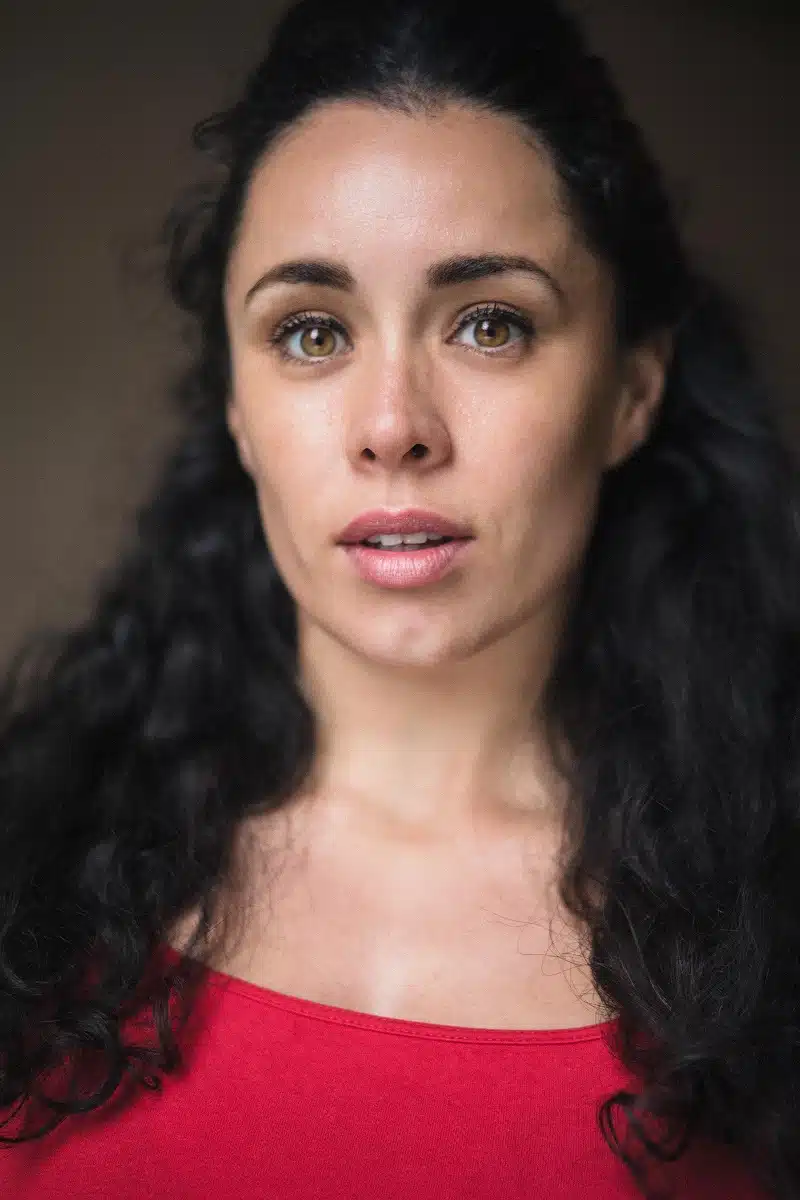
[00:09:52] Patricia Kelly: And so that was my first adaptation experience and my first co-writing experience. So I was really learning as I went. Very, very interesting in that we’re both based in Dublin, so we had the facility to sit in the room together, during a lot of our developing / initial development stages and also, of course did it virtually and so on.
And that was really interesting because it came from source material, it came from her play, and we both really wanted to make sure that we kept all of the magic of the play. So, Kate didn’t have as much scriptwriting experience as I had — her experience was in theater and acting and so on — so I kind of brought the structural knowledge to that collaboration.
And we kind of worked through it, but maybe not as strictly or something as I would do when I was just working by myself, I suppose, because it’s an unusual play. It’s a one-woman monologue, which is always going to be tricky to turn into a cinematic piece of work, but a really, really interesting project for that reason. And so, yeah, more flexibility.
[00:11:23] Emmanuel Oberg: Sorry, I interrupted you. A very particular voice.
[00:11:26] Patricia Kelly: Very much so.
[00:11:27] Emmanuel Oberg: Very original.
[00:11:28] Patricia Kelly: Exactly. I mean, the character of Gammy isn’t anyone like a character that I’ve seen before. So it’s absolutely crucial to mind her and mind her voice, and the type of humor, that’s in a very, very dark humor. And so that’s been a really interesting experience.
Whereas the more recent co-writing experience — I’m only a couple of drafts into it now — is the polar opposite in some ways because I’m collaborating with an Egyptian co-writer who’s in Egypt, so we are not meeting in the room together. And she has more scriptwriting experience and is also a producer, so she’s coming from that perspective also. And so I explained that I really like to work in this outline and structural way, and that all worked very well with her.
So we did a certain amount of work with that. And then we got to a point where she essentially said, I’d like to now just free it up a little bit and just write a little bit more freely, and not worry if there are now too many scenes or if they’re too long or if there’s too much setup or whatever.
And I said, I think that’s a great idea because we’re still only a draft two. So we need to absolutely feel that we have that kind of freedom. It would be wrong, I think, to feel, you know, too inhibited.
[00:13:03] Emmanuel Oberg: Constrained.
[00:13:03] Patricia Kelly: Too constrained, at a really, really early stage. We have just now delivered that to our script editor who’s going to come back with feedback. And so in future drafts, we’ll then look at it again and say, okay, maybe there’s too much setup here– you know, all of the things that we talked about in the rewrite process. So very different experiences, but really great for that, creatively very satisfying for those differences.
[00:13:31] Emmanuel Oberg: Great. Really interesting. The first workshop we did together was a comedy workshop in Dublin, I think in 2019, with Screen Skills Ireland at the time. And that’s when I suspect you first read Screenwriting Unchained, because that was part of the preparation for this workshop. And then you did an online TV series workshop with me in 2021, which was supported by Screen Ireland and Cultural and Creative Industries Skillnet.
And more recently, you took part in the workshop that you just mentioned, which was a feature rewrite programme, also supported by Screen Ireland, and that was with an early draft of your project “Gammy” that you just mentioned, as a creative team team with your co-writer Kate Finegan, and you are now developing that project further with Jason Forde who is a producer at Four Quadrant Films.
I wanted to ask you what was the impact of the comedy and TV series workshops on your career and what made you decide to apply for the feature rewrite workshop?
What was the impact of the Comedy and TV series workshops on your career?
[00:14:38] Patricia Kelly: Well, anytime I do a workshop or a program that kind of really makes creative sense to me, I always revisit them, going forward. I keep my notes, and I find it massively helpful, when I’m starting off something, to revisit notes because, from my perspective, it doesn’t matter how experienced we get or how knowledgeable in our craft we are. Screenwriting is inherently very difficult and so challenging that it’s hugely helpful for me to look back at old notes and just remind myself of the key points and so on going forward.
So I absolutely still look back at the comedy notes from that first workshop. For example, from that one, I remember, in particular, really looking at what kind of comedy is our specific project, whichever one we’re workshopping.
And I remember we went through all the different kinds of genres and subgenres and so on. And just that idea of being really, really clear about what it is that we were attempting with this specific project. Another project can be something else, but you know, just the more clarity we have of our vision, with the project.
And that comes all the way through, I think, even to last year’s as well. I find that very, very helpful because we can just get lost in the woods when we’re writing and it’s so easy to just to lose sight of where we’re going and what we’re trying to do and so on.
So, constantly bringing it back to what type of project this is. If it’s comedy, for example, what type of comedy, what subgenre, where is the humor coming from? And all of that I find very helpful.
And so the two TV projects that I’m working on, and I think two of the feature films are comedies, generally, dark comedies. And so it’s great to be able to look back and kind of remind, refresh myself in those kind of things.
Then with the TV workshop, again, really looking into what type of TV show it was, all the different types that there are. You know, whether they’re plot-led or character-led and, and so on.

And looking at all the different story strands going through them, interweaving them and how one does that successfully is really one of the main things that I took away from those workshops, that were all online, they were great.
Again, I still have my notes from that. When it’s time to look back at, or it’s time to redraft one of my TV ideas. For example, “Humdrum” is the one that I’m currently most working on. I will look back at that and keep reminding myself of specifically what it is, where the humor is coming from, where the drama is coming from, you know, characterization and so on and so forth.
Why did you decide to apply for the Feature Rewrite Programme?
Really it was because I think all of the work that I’ve done with your sessions and your workshops, I find them just really, really practical for me. Everyone works so differently, but I’m a very practical person and I find that I’m never wondering what you mean, or, you know, all the ideas are always backed up or based on very real life examples. I can look at this clip, I can see the point that you’re making, and I most importantly, can see how to apply that to my own redrafting.
And I found that across the board. So that’s essentially what initially made me want to do the rewriting workshop in Donegal. And then, very specifically, it was because it came at exactly the right time for myself and Kate.
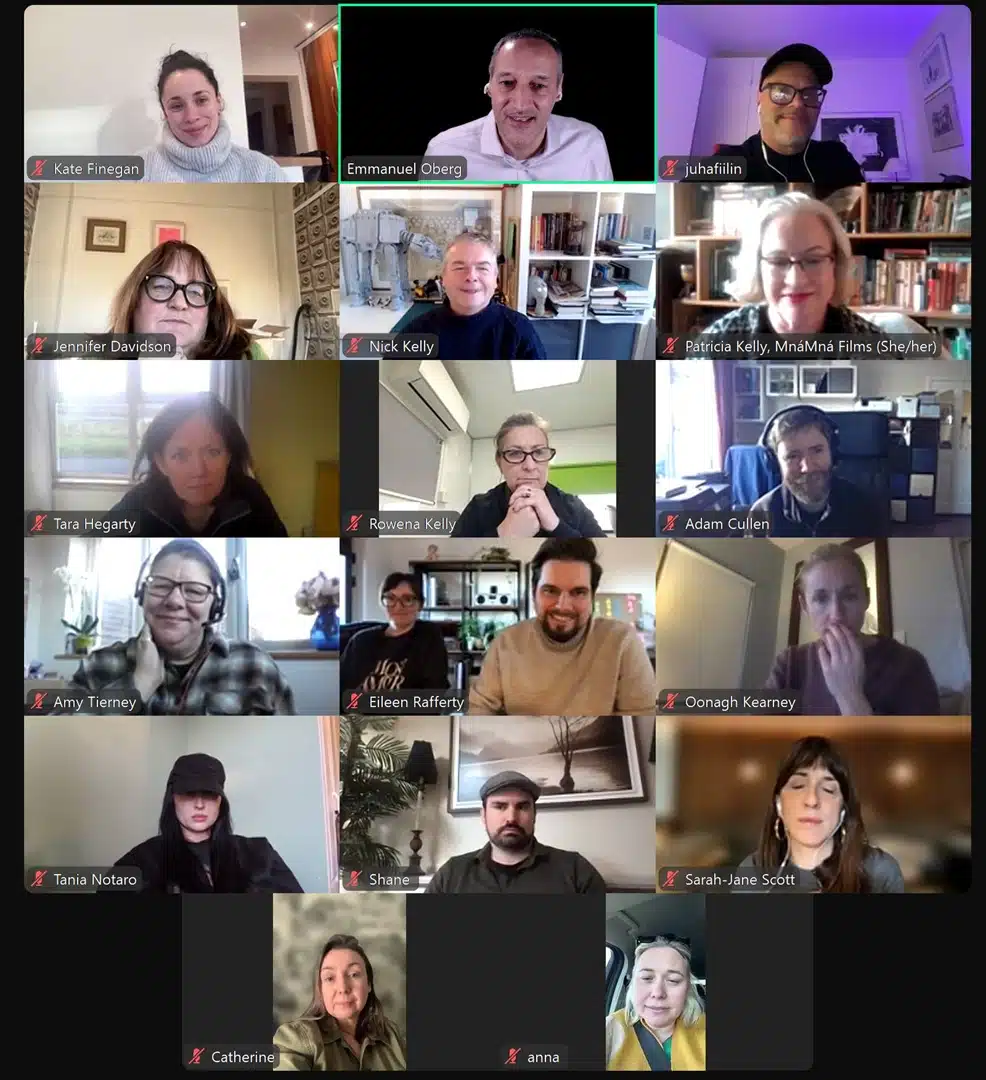
We were a couple of drafts into it, well I know we did our draft zero with you, but we had done kind of a lot of work together and so it just came at the right time for us then to really give us a strong roadmap to go and work with you and our peers in the room and, you know, to really even work on how we’re pitching the idea and distilling it down. Clarity, again, just clarity in terms of what it was that we were trying to do. So, they were the main reasons. And it really, it really helped and worked out for us.
00:19:28] Emmanuel Oberg: Great. Let’s try to break it down a little bit. The first stage of the feature rewrite programme is an online workshop that has two parts. First, a self-led part based on the Advanced Script Development interactive online course, and then a live part, with group work and Q&A sessions.
How did you find the Advanced Script Development Workshop (Stage 1 of the Feature Rewrite Programme)?
To begin with, can you tell us how you found the self-led interactive online course?
[00:19:56] Patricia Kelly: It was great. It was a huge amount of examples from different types of films and so on to get each point across in great detail, which was really helpful. I found I absolutely had a proper grasp of what was entailed in the whole program. And so I was very well prepared then when we got going at our live sessions in Donegal.
And then the online aspect, the online group workshop, well, I just remember really that it was helpful. It was a good opportunity if anyone had any questions to break anything down. But I found that the self-led online part of it was very clear. And so it did what I needed it to do in terms of my preparations.
So the online Q&A and groupwork was just a nice overall “Everyone know what we’re doing here?”. But you know, had I not been able to make that, for example, I think I still would’ve been fine turning up to the live sessions because the online went into such detail. It was very helpful.
[00:21:17] Emmanuel Oberg: Yeah. And the thing is that I think the year you did it, we only had one online session at the end of the course once you had gone through the whole course, because it was not yet a full workshop. Now we’ve changed the programme and we’re doing the online course as a full workshop.
So we have three sessions, as participants go through the course, which makes it easier to go through the course actually, because you have these sessions that give you a motivation to go through the content in chunks and discuss it, and ask any questions as you go through the content.
So you probably get a bit more in the programme as it is now, because it was the first time we did it in Donegal. And so we obviously try to improve it, based on the participants’ feedback, we try to make it better every time. So that’s one of the big changes that we’ve made.
When you did the online course, you were already experienced, you had already written and directed your first feature film. So I wanted to ask you, as an experienced writer-director, what did you learn from the online course? What was the most helpful, the most immediately applicable part, regarding how you approach your projects in general and feature films in particular. And I have to connect that to the fact that you had already read the book in 2019, when you did the comedy workshop, so you probably had some of the training or some, some of the theory, early on, but I was just curious…
As an experienced writer-director, what did you learn in the self-led online course that was immediately applicable?
[00:22:51] Patricia Kelly: Yeah, well, I found it was great to be able to get an overview of what I’d covered. Because obviously a number of years had passed since reading the book. So it was great to get a really deep dive into, refreshing my memory.
And I suppose one of the strongest takeaways for me was this idea, you know, as I said earlier, being really, really clear about what the project is and what our intentions are with it. Because I find that more and more now, there is an expectation or a requirement for writers to absolutely know what audience they are writing for. You know, who’s the intended audience? How are they going to be accessed? Things like that.
And sometimes, you know, writers can be like “Oh, listen, who the audience is and how to reach them and so on is the producer’s responsibility. That’s not not for me to concern myself too much with”. And I do understand that as well, but it’s a simple fact of life that in every application for funding, for workshops, for everything, more and more, it seems that it is absolutely a requirement now of the writer to think long and hard about this.
And so I think having real clarity and focus in terms of who our audience is for this specific project, and what their expectations are and how we’re going to fulfill those expectations in some ways, subvert them in other ways, but to be doing so really mindfully, all the way through the process, I think is probably one of the strongest takeaways from it.
And then, you know, which then kind of set up all the different steps in the 12 steps in the Donegal workshop.
[00:25:13] Emmanuel Oberg: Makes sense. One question very specific to the way you, you know, what you did before you did that workshop. You had already read “Screenwriting Unchained“, so I just wanted, I’m curious about, what did the online course bring to the table compared to the book? For example, did the video training, you know, the film clips, the quizzes, the chat assistant, did that make a difference in the way you experienced the content? Because it’s more or less the same content as in the book, but it’s presented very differently.
What did the online course bring to the table compared to the book, Screenwriting Unchained?
[00:25:38] Patricia Kelly: Yeah, absolutely. I think probably the video tutorials then followed by watching the clips and then discussing them. I mean, that’s really, really helpful because obviously reading the book is great and it’s something that I still go back to and, and remind myself of, but I suppose it’s the same as the difference between reading a book and being in a live class as well, in a classroom somewhere. I think it lands a little bit more. It’s easy when you’re reading something to just kind of skim it a little bit and kind of go, oh yeah, that landed.

But maybe it doesn’t land quite as much as listening to the tutor making a point, watching a very specific clip, and then having it reiterated or broken down further or something like that, you know, so yeah, I think it just makes things land more and it makes things just stickier.
For me, I would think that the chat function and the quizzes are a nice little add-on. Personally, I think that for me, the other two carried more weight for me than those. But yeah, in an ideal world, I would probably have it that I would watch the online tutorial, watch the film clip and then I would have the book to be able to refer to quickly as I’m redrafting. I think it’s probably the way that would be most helpful for me.
[00:27:18] Emmanuel Oberg: Well, that’s the way it’s intended, so that’s good if that’s the way you like to experience it!
Now the second stage of the feature rewrite programme is called The Rewrite Stuff – 12 Ways to a Stronger Screenplay.
And so for those who are not familiar with it, it’s a project-led, six-month hybrid workshop that starts with an intensive one-week in-person event, where selected writers workshop their projects before defining a clear direction for a rewrite. And a few months later, we have a follow-up meeting online so that each creative team can get feedback on their rewrite before moving to the next stage with it.
So I wanted to ask you, how did that Stage 2 workshop go from your point of view and did it help you move your project and your career forward?
How did The Rewrite Stuff workshop (Stage 2 of the Feature Rewrite Programme) go and did it help you move your project and your career forward?
[00:28:16] Patricia Kelly: Yeah, very much so. As I mentioned earlier, I already like working in drafts and giving each draft a specific pass.
So having something like those twelve stages for me is really, really helpful. It just breaks things down so that it’s not “I’m redrafting this now and I’m just trying to improve everything in all one go”, you know?
Having one where I look at, say the fractal aspect, and that’s just what I’m focusing on as I’m redrafting this, or I’m just looking at managing conflict, or I’m just looking at managing information. Or, you know, characterization or something like that. So being able to recraft and redraft in layers, is massively helpful to me, and I think really it was very helpful.
[00:29:10] Emmanuel Oberg: That’s what we did in the first week, during the in-person event. When we started the work, going through the twelve different ways.

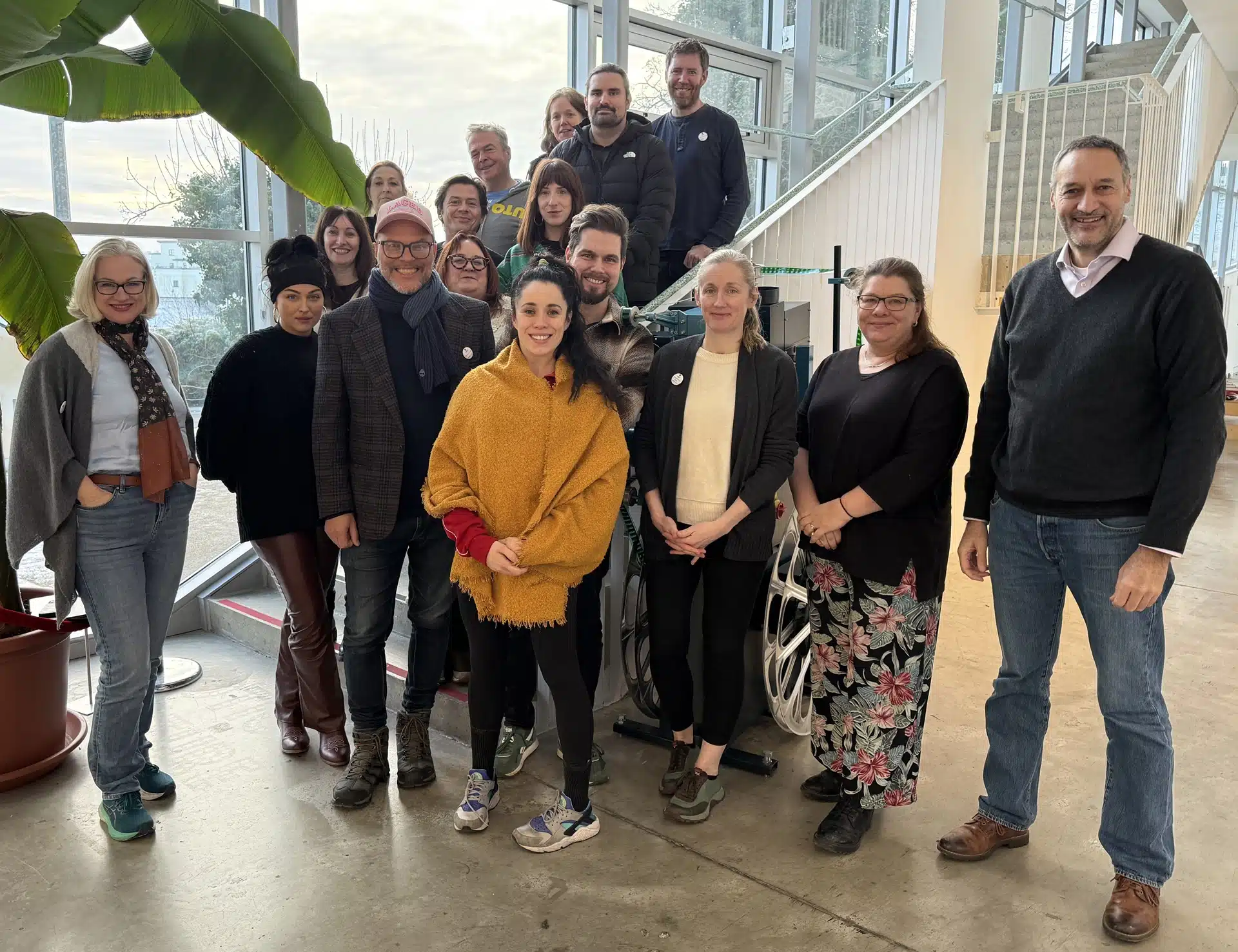
[00:29:21] Patricia Kelly: Yes, yes, absolutely. I think the fact that it was in person and for me specifically working with my co-writer, Kate, was great because, you know, you introduced one of the twelve, for example, and then we went away and we had a chat about it and we talked about how that related to our project and what we would do when. We were, you know, brainstorming with our specific project, which was really helpful.
And then being able to ask questions and so on and break it all down like that, was really helpful so that it gave us then a really good roadmap and a number of points so that when we got back together afterwards to work on our next draft, we had a bunch of steps to go through and a very focused approach to it.
So again, it wasn’t just like “Okay, we have to make this better. How do we do that?” But also it was very, very helpful to, I think– were there about a dozen projects? 10 or 12 projects or something? I can’t remember.
[00:30:26] Emmanuel Oberg: 12 projects, yeah.
[00:30:27] Patricia Kelly: It was great because we all learn so much from each other. Again, it’s so easy to lose sight of our own projects and what we’re trying to achieve and how well we are doing or not doing that. And it can be much easier then to see how another writer or team is working through one of these steps and then learning from somebody else’s experience as well, you go “oh, okay…” I think it’s easy to see how somebody else isn’t getting that quite right. And then it makes you think “oh, right, maybe that’s why I’m struggling with this particular aspect”, or something like that, you know? So, yeah, the peer feedback and listening to other people workshopping in that very focused way while always thinking of our own project was very helpful.
[00:31:22] Emmanuel Oberg: Great. And so what was the impact on the project of the programme?
What was the impact of The Rewrite Stuff on your project?
[00:31:27] Patricia Kelly: Yeah, well, essentially we came away and were very easily able to do the follow up, the next draft of it – let’s just call that draft Draft 3, for example – and then we had our meeting with you, and you gave us feedback on that.
And then, we were able to take that and rework it and look at the areas in particular, really focusing on… I remember one of the things that was very helpful to me was this idea — particularly because we don’t have the most straightforward kind of narrative project, it is something quite different — so answering that question of what do we want the audience to root for? And really keeping that front and center, as we redraft it, because we have a character who is a tricky character. She’s not easy to identify or empathize with or love or whatever.
So, you know, really kind of looking at that idea of bringing the audience with us and what we want them to root for, was very helpful. And so essentially through the whole project, I think we ended up then with a really solid, maybe fourth draft.
We were also working with a script editor as part of the Screen Ireland feature film development process. So we worked with you first and got our screenplay to a good, strong stage. And then were able to move that forward working with our script editor, and then ultimately we were able to deliver a really strong — technically first draft for Screen Ireland purposes, it would be many more than that — but we were really happy with what we did.
We then subsequently got feedback on that and we were told, look, it’s in a great place, but you know, there’s a little more work to be done. So we have applied for additional funding and we’re waiting to hear and we’re very hopeful that we’ll be able to progress and, hopefully then subsequent to that, be applying for production funding and get it across the line one of these days.
[00:33:44] Emmanuel Oberg: Great. Well, fingers crossed for the application, I’ll put a little caption or something, if you give me the good news. We’ll know. Of course, your success — especially on this project — comes from your and Kate’s talent and hard work, but is there anything that you could attribute to the training and development work that we’ve done together, something that changed because of it?
Is there anything that you could attribute to the training and development work we’ve done together?
[00:34:12] Patricia Kelly: Yes. Before I started working with you, I’d never come across Maslow’s Hierarchy of Needs, for example, and I find that really helpful.
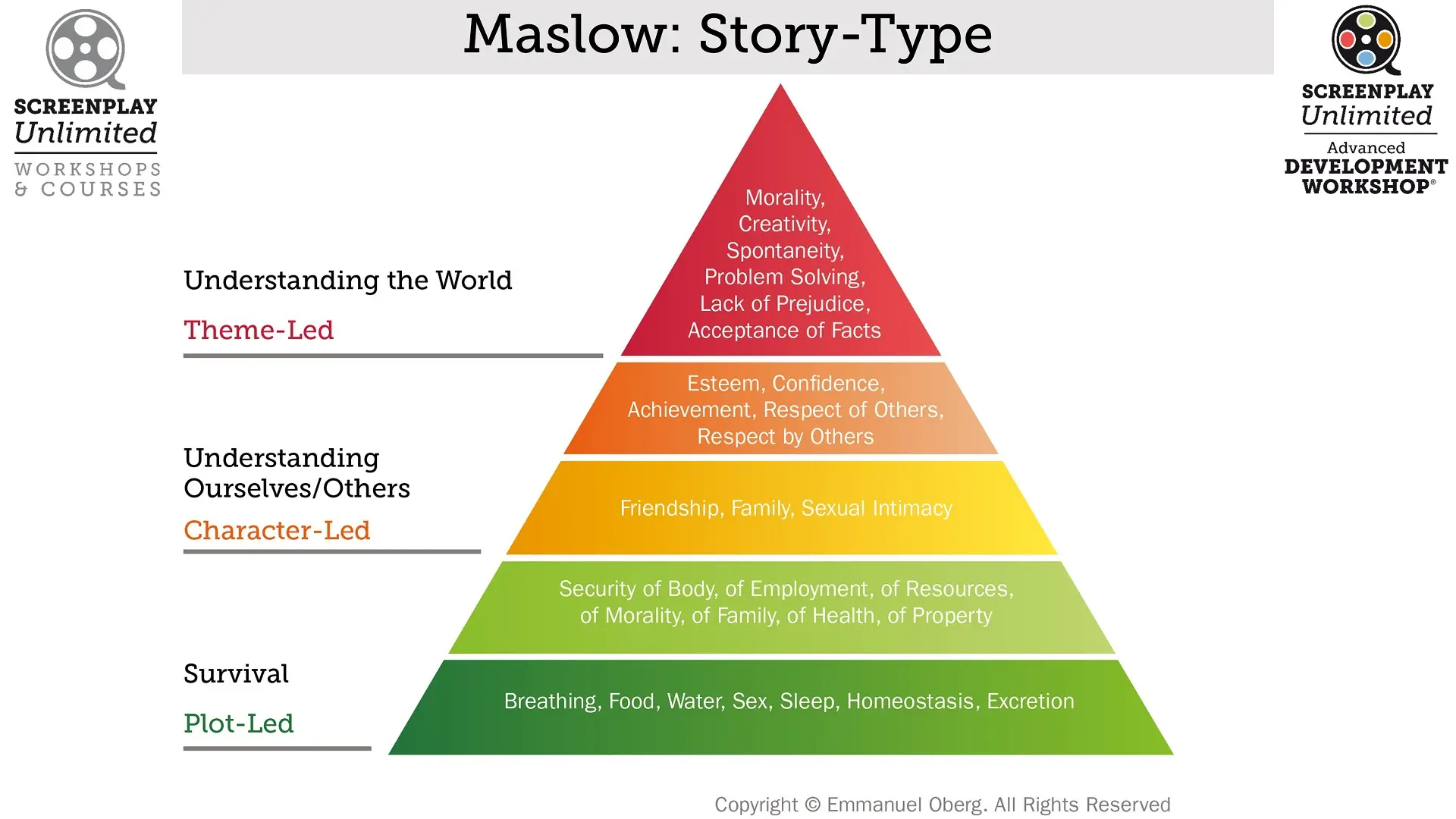
Again, coming back to the idea of the audience and, you know, what the audience are going to care for, care about, root for, all that kind of thing, and really understanding… Because we’re so close to our own projects. So, having the opportunity and forcing ourselves to step outside ourselves, look at our project from the audience’s perspective, particularly through something like the Hierarchy of Needs, I think is really helpful.
And, you know, approaching our projects kind of side on or something like that is just hugely helpful. And I think that’s something that I’ve probably paid attention to through all of my projects since I first came across it.
What are you working on, what can we read or watch and what’s in the pipeline?
[00:35:12] Emmanuel Oberg: Before I let you go, can you tell us about what you’re working on at the moment? What can we read or watch if we’d like to find out more about your work and what you have in the pipeline?
[00:35:25] Patricia Kelly: Yeah, sure. Well at the moment the thing to watch is Verdigris, my debut feature, which is currently streaming in Ireland on the RTE player and in Italy on CGTV [Note: as well as in flight on Aer Lingus until August 2026].
So hopefully there’ll be more territories added in the coming months and later on in the year. Our sales agents are working hard to get it into other territories. So if anyone would like to follow its progress and if somebody is outside of Ireland or Italy, going on to my website, www.mnamnafilms.com or following on social media, finding either MnáMná Films, myself, Patricia Kelly or Verdigris film, we keep everybody updated on the film projects through those means.
And then, other than that, everything, as I said, Gammy, we’re waiting to hear from, we’re really hopeful that sooner or later that will get across the line, and we’ll be in production. So again, people can follow that based on the website and social media.
And then the other projects… I’m working on another project with Paul Fitzsimons of Prelude content. Paul and I co-produced Verdigris, so it’s great to be working with him again on a new project that’s a little earlier on in its development process.
And then I’m working on the one that I mentioned I’m co-writing with the Egyptian co-writer. So it’s all gone really well, moving things along and just keep working.
Finally, Humdrum is the TV show that I’m developing. I’ll be taking that to Series Mania forum next month. Looking forward to that. That’s something that there’s been interest in so far. I’ve taken it through a Sundance lab and a Stowe Story Connemara lab and Series Makers and so on.
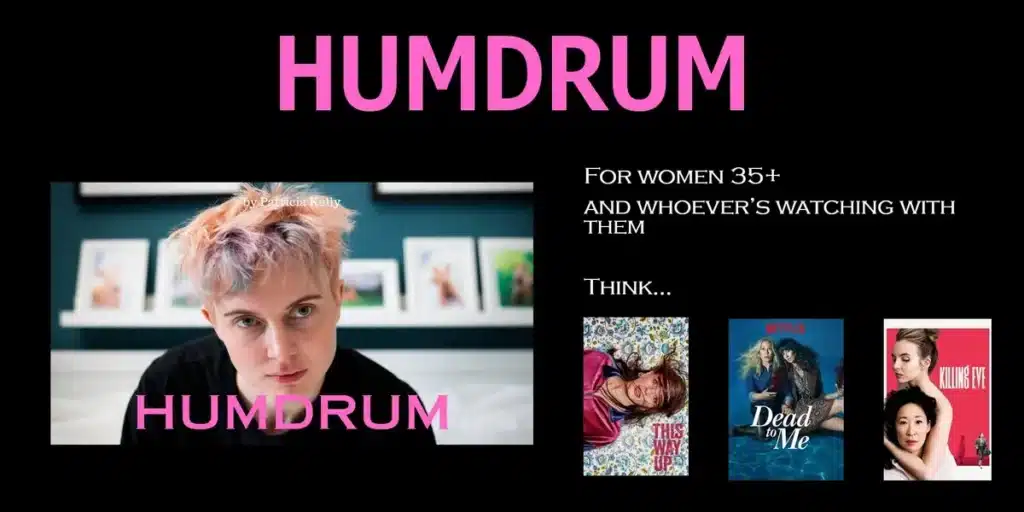
So that’s another one, which is great, all of these projects are keeping me very busy.
Thanks Patricia and congrats!
[00:37:46] Emmanuel Oberg: That’s great. I mean, fingers crossed for all these different things that you have floating around. I’ll put links to all these things on or around this video, so that people can go and find out about your work.
I highly recommend Verdigris. I thought it was amazing, a really interesting film, and apart from your work, I thought the cast was fabulous. The two main characters [played by Geraldine McAlinden and Maya O’Shea] are really, really great. So I highly recommend watching it if you can.
Thank you so much for all this time, for giving us a chance to get to know you and your work a little bit better. And please, let us know when things happen. I’m a big fan and I’m really looking forward to watching new stuff from you.
[00:38:36] Patricia Kelly: Thank you. Thanks very much, Emmanuel. It’s been great. I’ve really loved doing all the workshops. They’ve really made sense to me. They’re in plain English and easy to understand, easy to adopt into my own process, so they’ve been very, very helpful. I look forward to doing more and I’ll definitely keep you updated on all my projects and let you know how they’re going.
[00:39:02] Emmanuel Oberg: Great. Thank you so much.
[00:39:04] Patricia Kelly: Thank you.
Next Steps
Contacting or Finding Out More About Patricia Kelly
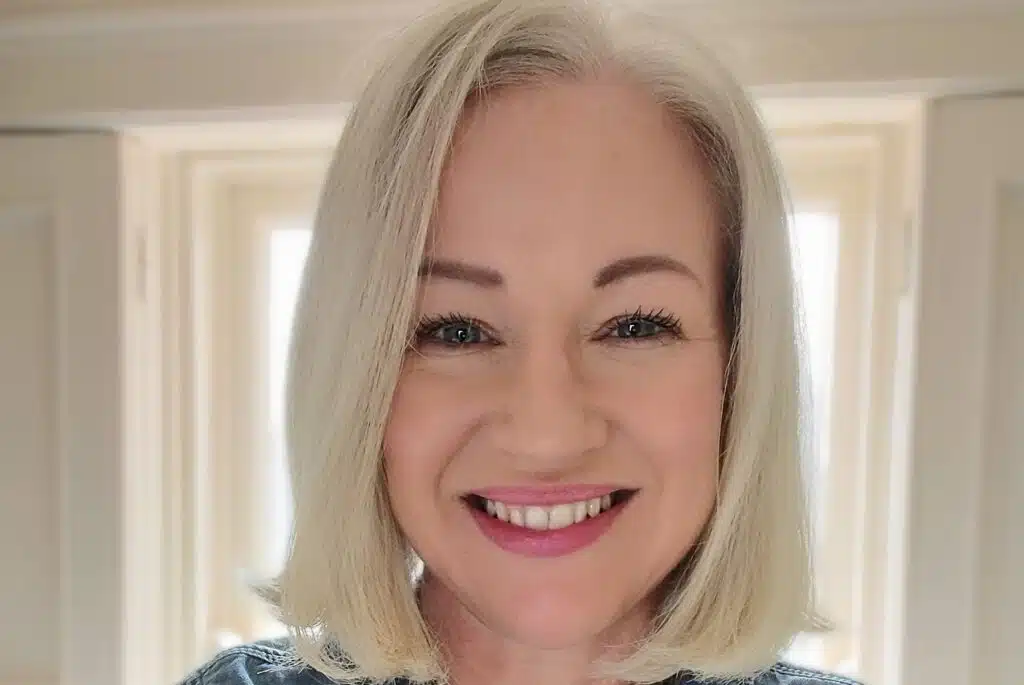
For more information about Patricia, please visit MnáMná Films or Patricia’s LinkedIn.
Patricia can be reached through her agent, Christina Pickworth at Imagine Talent.
Sharing Your Own Success Story
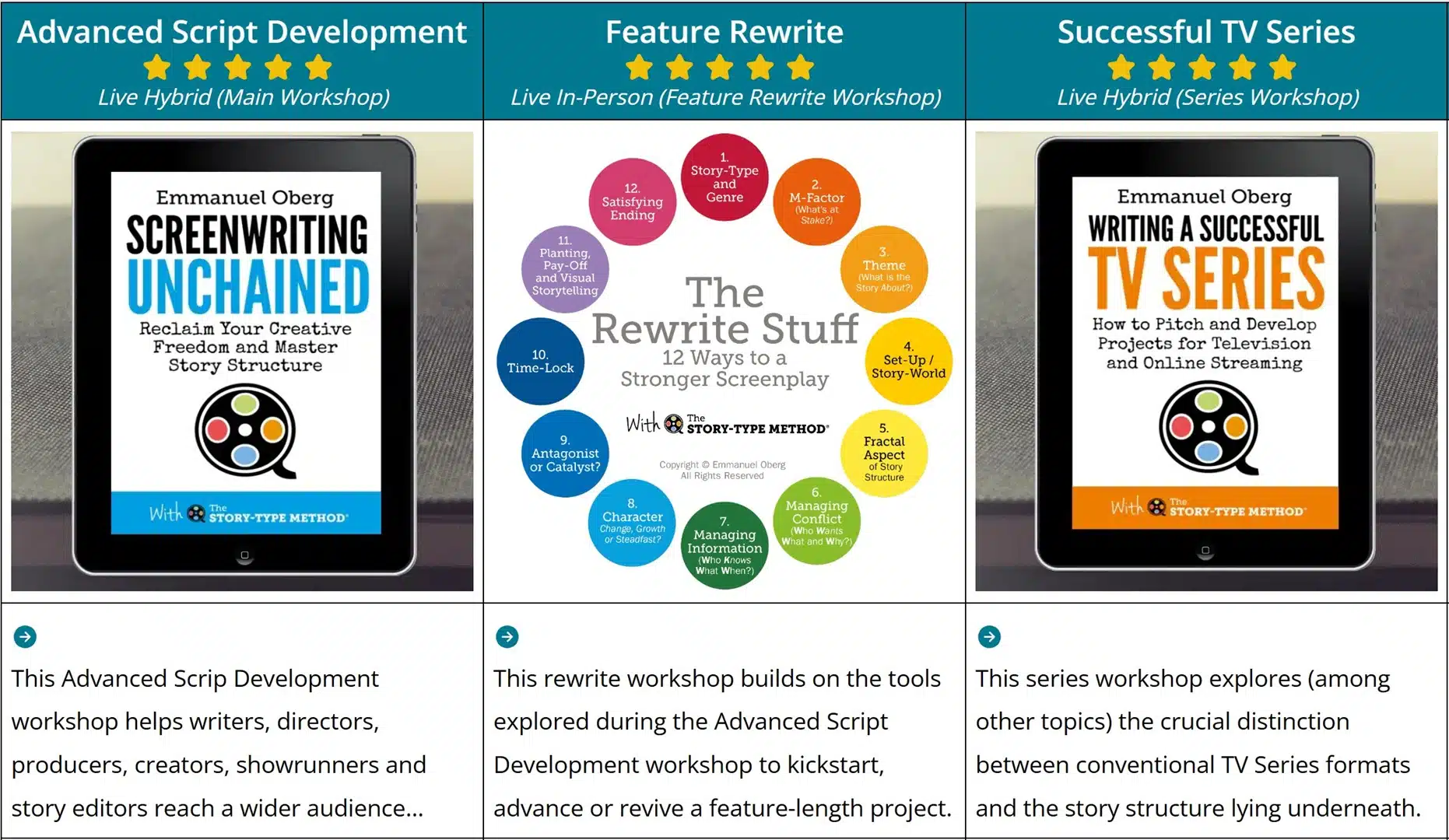
If you’ve done an online course, a live workshop with us or if you’ve used our script consulting and coaching services and you’d like to share your success story, please get in touch. We’d love to hear from you and we’ll be delighted to showcase your achievements!
Finding Out More About Our Training
If you’d like to find out more about our training, why not start with a free online course, webinar or e-book on script development introducing Emmanuel’s innovative method?

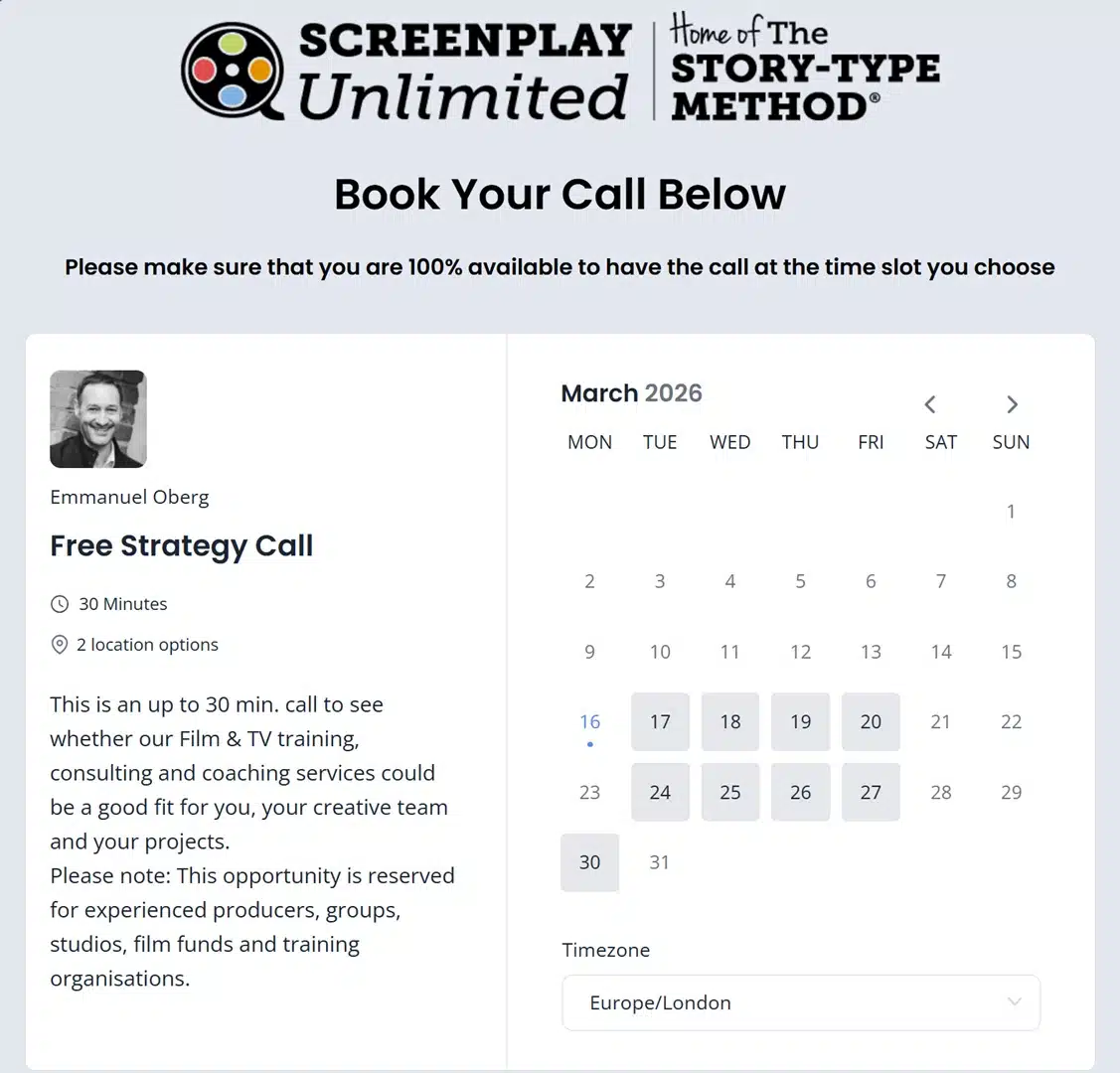
If you’re an experienced producer or represent a studio, a media group, a film fund or a training organisation and if you’d like to discuss a possible collaboration, please book a free strategy call with Emmanuel.
Register with us to receive our newsletter and
Get Access to FREE Resources

Interactive story tool, mini-course, webinar replays, book samplers, bonus content, case studies and more!


